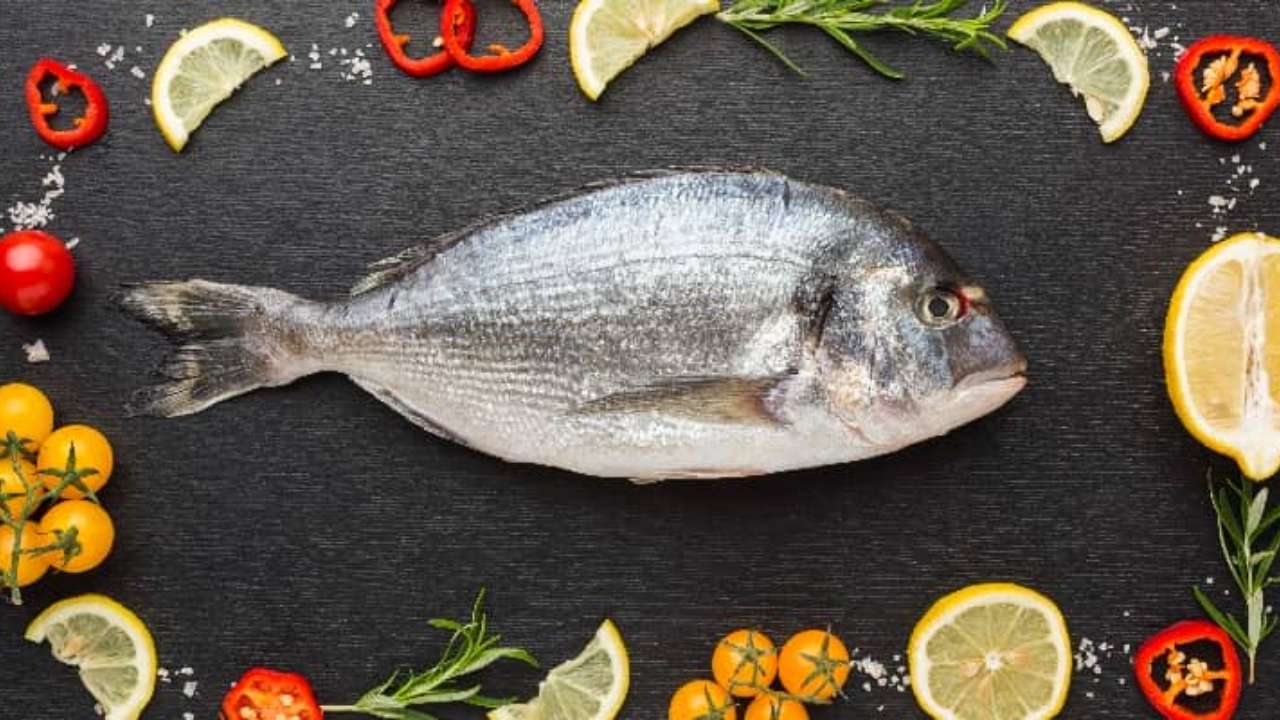
India is blessed with an extensive shoreline. Seafood has been a part of our culture. Both, salt water and fresh water seafood are a staple in many parts of the country. However, is seafood really as health-promoting as widely believed? Is it necessary for the brain and heart health? Do you really need to eat fish to get Omega-3? What are the environmental impacts of eating fish? Read on to learn more.
Our oceans are treated as a garbage dump – raw sewage, runoff from animal agriculture, harmful chemicals, microplastics, and trash, all find their way eventually into the ocean waters.
So the fish accumulate pesticide residues and chemicals like polychlorinated biphenyls (PCBs), dioxins, DDT, drugs, heavy metals – such as mercury, and anything else that is released into the water.
Polychlorinated biphenyls (PCBs) are highly toxic industrial chemicals. Slow to break down, they accumulate at the bottom of waterways and hence in the tissues of seafood. These chemicals damage the circulatory, nervous, immune, endocrine, and digestive systems.
Carnivorous fish like tuna and carp accumulate high concentrations of mercury in their tissues. Usually, pregnant and nursing mothers, aspiring mothers and young children are asked to avoid certain types of fish to prevent mercury toxification. Mercury poisoning has been known to cause nervous system disorders, reproductive issues, and developmental problems in children & unborn babies. It also causes neurological damage, liver damage and skin issues.
All the plastic waste generated by human activity eventually lands up in the oceans. Commercial fishing also generates huge amounts of plastic waste in the seas such as abandoned fishing nets. This plastic eventually breaks up under the action of sunlight and the force of water, into millions of smaller pieces that are almost impossible to clean up.
As per a report in The Telegraph, seafood eaters ingest up to 11,000 tiny particles of plastic every year.
The digestion of all animal products including fish creates acidic waste. High acid buildup in the body creates aches and pains, kidney issues, bone loss, hair fall etc.
Eskimos are among the highest consumers of fish on Earth; yet they have the highest rates of osteoporosis on our planet.
Fact: Many doctors and health associations recommend eating fish or fish oil for Omega-3 fats. It is particularly marketed toward children as a need for healthy brain development. But the truth is that ‘only plants can make the omega-3 fats’. Only plants can synthesize the energy from the sun, air & earth and make omega-3.
If we consume fish for Omega-3, we also get a high side dose of chemicals and saturated fats which we would rather avoid. Fish get omega-3 by consuming algae. We too can get omega-3 directly by consuming plants – bypassing the harmful chemicals.
Fish and other sea foods have long been promoted as low fat, low cholesterol and healthier sources of protein.
Fact: Nothing can be further from the truth as fish are high in cholesterol and saturated fats just like other animal products. Between 15 to 30 percent of the fat in fish is saturated, which makes our livers produce more artery-clogging cholesterol. Other seafood, like shrimp, contains even more cholesterol.
| Type of fish | % of saturated fats |
|---|---|
| Anchovy | 29% |
| Tuna | 29% |
| Salmon | 24% |
| Cod | 17% |
| Haddock | 13% |
Source: Food For Life by Dr. Neal Barnard
| Food | mg/100 calories |
|---|---|
| Whole eggs | 272 |
| Lobster | 73 |
| Fish | 50 |
| Chicken | 44 |
| Beef | 29 |
| Pork | 24 |
| Plant food (legumes, fruits, vegetables, nuts, seeds, grains) | 0 |
Source: https://www.drmcdougall.com/misc/2003nl/030200pufishisnothealthfood.htm
And they have zero Fiber – which is necessary for good gut bacteria and timely elimination of wastes. High fat causes a host of diseases like insulin resistance, obesity, diabetes, high BP, gall stones, and even cancers.
Fish oil supplements are also high in cholesterol and contaminants which cause damage to the body.
There is an intricate web of life in the oceans. Depleting fish populations is affecting oceans. 90% of all large fish and 70% of seabirds are now extinct from the world’s oceans due to becoming trapped in deadly fishing nets over the last few years. The diversity of the seas makes up the lungs of our planet, if the ocean dies, we die.
India ranks second in the world in total fish production with an annual fish production of about 9.06 million metric tonnes.
Traditionally, fishing operations were seasonal in nature, done by fishing communities residing along the coastline. The Blue Revolution (Nili Kranti), launched during the 7th Five Year Plan (1985-1990) by the Indian government aimed to triple the production of seafood by 2020.
The demand for seafood and rising population are causing depletion of fish, faster than what could be naturally replenished. Hence, the practice of aquaculture or fish farming started. Today, worldwide, almost 50% of fish consumption is from fish farms. Fish, who are known to swim several kilometers in a day are jammed into small ponds or areas of the sea and confined by nets.
This causes stress and disease outbreaks among them. Hence, fish farming uses antibiotics in large amounts. Other chemicals to clear the water, remove water hardness, and to prevent algae are also added to the water. These farmed fish store all the chemicals in their tissues which gets into our bodies when consumed. Many farmed fish are also genetically modified. These genetically modified fish may escape the confinement and breed with free sea and ocean fish causing species contamination.
Fish are also fed artificial fish food in the form of pellets made from questionable ingredients including by-catch of fishing, As per a study in 2020, one third of the entire marine landings in India goes to the fish meal industry.
Life in the seas is collapsing faster than life on land. Over 70% of the world’s fish species are either fully exploited or depleted. Thousands of fish fleets compete for the limited fish in the ocean.
The modern fishing industry employs all the tools of modern warfare: satellite imagery, GPS signals, remote monitors, and sonars to overfish and exhaust all of the oceans.
Huge boats or trawlers indiscriminately strip the oceans of sea life. Bottom-trawling and dredging practices of commercial fishing operations destroy the ocean floor.
Longline fishing is another commercial fishing technique that uses a long line (often up to 10km) – called the main line, left for many days with baited hooks attached at intervals.
These commercial practices catch huge amounts of by-catch along with fish. By-catch is unwanted animals who are netted but later thrown back into the water dead or used for fish feed. These comprise whales, dolphins, turtles, sea birds, and many other endangered animals.
Fish and other seafood belong to the oceans, seas, rivers and not to our plates. There are so many healthy foods for us that come from plants. Our natural foods are fruits, vegetables, nuts, seeds & sprouts.
We can eat in a way that not only sustains us but also the intricate life on our planet, particularly our oceans and seas where life began.
TAGS
Loading coupons...