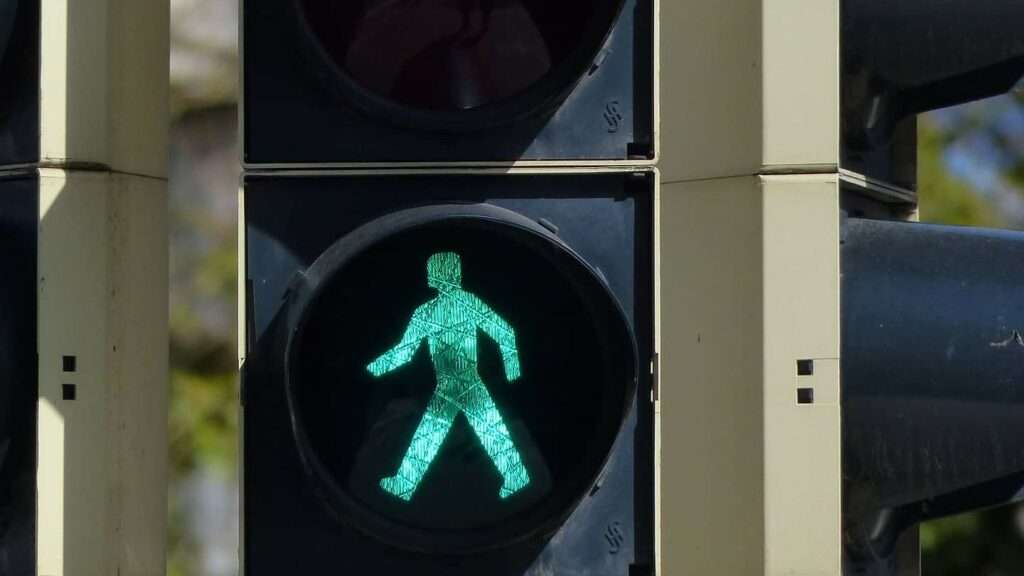
Inside an average home, we take around a thousand steps a day to move about, which is a good 0.76 kilometre. A walk to the neighbourhood shop, say 500 metres away, will approximately take 650 steps to go one way and will be a trip total of around 1300 steps. Walking happens this simply! In our lifetime we connect to mother Earth with our feet, sharing our worries and thoughts with her and getting gently nourished back; making it truly a WALK TO FREEDOM.
In every walk with nature, one receives far more than he seeks – John Muir
It is the biggest joy to watch our children take their first ‘baby’ steps. The little falls that they ignore and their natural taking to standing up and trying to walk, truly define us as the most unique species that evolved – one that would walk on this planet.
A simple walk is a body ability that is a superb exercise in itself and is loaded with benefits. Yet we often discount the greatness of walking despite its simplicity and low injury risks. Perhaps some of us feel it is not intense enough or that it seems so normal that we take it too casually.
While moving from forests to grasslands, we stopped using four feet; and evolved to become bipedal and started walking on our two feet – almost six million years ago! This is ‘the’ advantage that has helped human beings hunt, farm and survive much better on earth.
A child’s first walk becomes the foundation for a lifetime of running, jumping, bending, lifting and what not! Walking involves a large number of the lower body and upper body muscles together.
It activates and works on the quadriceps, hamstrings, buttock muscles, core/ stomach muscles, calf muscles, pelvis stabilising muscles, arms and shoulder muscles – all in one go. Because of the lower impact force on muscles and better joint lubrication, there are lower possibilities of injury in walking.
According to an article published by Harvard Health Publishing, the risk of exercise-related injuries in walking is only as low as 1% to 5% as against an exercise like running where it is at 20% to 70%.
While walking, a walker has one foot on the ground at any point in time. Thus a typical walker’s foot does not need to absorb any impact force. And their legs are subjected to a relatively low level of stress impact in terms of their body weight. While a runner’s body is subject to stress three times their body weight.
In running, aerobics and jogging too, the feet are airborne at one point or the other. This makes such exercises a higher impact activity than walking.
Image Credit for pic: Mabel Amber via pixabay.com
Here is the list of the top few.
When we walk barefoot on the ground, mud roads and grass, negative ions from the earth helps to charge and balance the positive ions in our body. When barefoot, we are more stable, with better body balance even on floor surfaces like tiles or wooden than when wearing footwear.
Image credit for pic: Wokandapix via pexels.com
Image Credit for pic: Dương Nhân via pexels.com
We walk many steps without our knowledge in our daily lives – be it to a grocery mart, park, a mountain trek or a temple trail. Our life literally moves on because of this low injury prone and joint freeing activity.
When such a stress-busting and simple walk becomes our daily partner to health & fitness, anytime, anywhere and for free – what more could one ask for.
Image Credit for title pic: Hans Braxmeier via pixabay.com
TAGS
Inside an average home, we take around a thousand steps a day to move about, which is a good 0.76 kilometre. A walk to the neighbourhood shop, say 500 metres away, will approximately take 650 steps to go one way and will be a trip total of around 1300 steps. Walking happens this simply! In our lifetime we connect to mother Earth with our feet, sharing our worries and thoughts with her and getting gently nourished back; making it truly a WALK TO FREEDOM.
In every walk with nature, one receives far more than he seeks – John Muir
It is the biggest joy to watch our children take their first ‘baby’ steps. The little falls that they ignore and their natural taking to standing up and trying to walk, truly define us as the most unique species that evolved – one that would walk on this planet.
A simple walk is a body ability that is a superb exercise in itself and is loaded with benefits. Yet we often discount the greatness of walking despite its simplicity and low injury risks. Perhaps some of us feel it is not intense enough or that it seems so normal that we take it too casually.
While moving from forests to grasslands, we stopped using four feet; and evolved to become bipedal and started walking on our two feet – almost six million years ago! This is ‘the’ advantage that has helped human beings hunt, farm and survive much better on earth.
A child’s first walk becomes the foundation for a lifetime of running, jumping, bending, lifting and what not! Walking involves a large number of the lower body and upper body muscles together.
It activates and works on the quadriceps, hamstrings, buttock muscles, core/ stomach muscles, calf muscles, pelvis stabilising muscles, arms and shoulder muscles – all in one go. Because of the lower impact force on muscles and better joint lubrication, there are lower possibilities of injury in walking.
According to an article published by Harvard Health Publishing, the risk of exercise-related injuries in walking is only as low as 1% to 5% as against an exercise like running where it is at 20% to 70%.
While walking, a walker has one foot on the ground at any point in time. Thus a typical walker’s foot does not need to absorb any impact force. And their legs are subjected to a relatively low level of stress impact in terms of their body weight. While a runner’s body is subject to stress three times their body weight.
In running, aerobics and jogging too, the feet are airborne at one point or the other. This makes such exercises a higher impact activity than walking.
Image Credit for pic: Mabel Amber via pixabay.com
Here is the list of the top few.
When we walk barefoot on the ground, mud roads and grass, negative ions from the earth helps to charge and balance the positive ions in our body. When barefoot, we are more stable, with better body balance even on floor surfaces like tiles or wooden than when wearing footwear.
Image credit for pic: Wokandapix via pexels.com
Image Credit for pic: Dương Nhân via pexels.com
We walk many steps without our knowledge in our daily lives – be it to a grocery mart, park, a mountain trek or a temple trail. Our life literally moves on because of this low injury prone and joint freeing activity.
When such a stress-busting and simple walk becomes our daily partner to health & fitness, anytime, anywhere and for free – what more could one ask for.
Image Credit for title pic: Hans Braxmeier via pixabay.com
TAGS
Added to cart
Check out our shop to see what's available
Loading coupons...