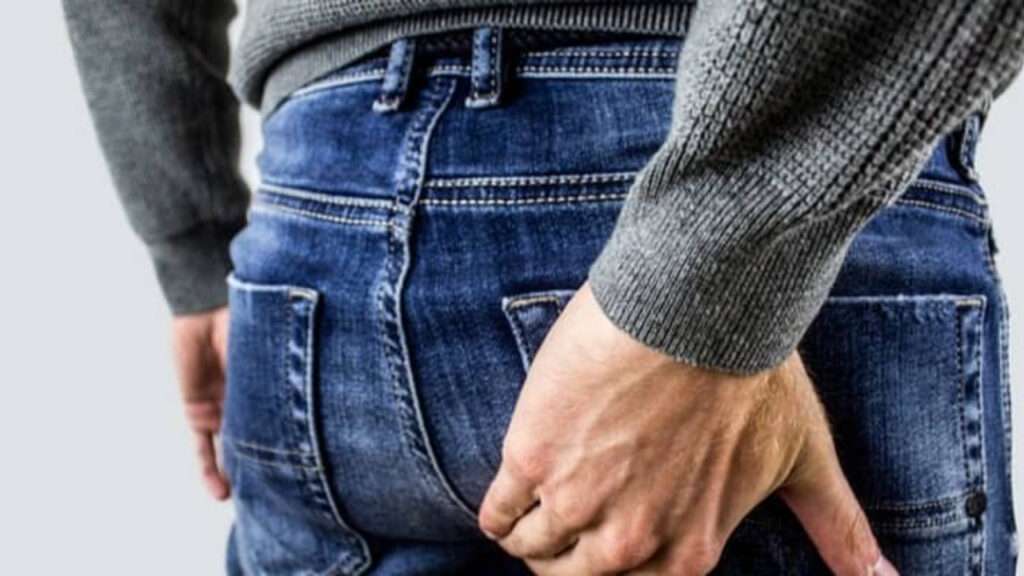
What is piles or haemorrhoids? How does it develop? How can this painful condition be prevented and what diet changes are needed? This article takes a closer look at this very common problem which many people suffer from today.
Instead of blaming the unhygienic habits of living as the sole cause of haemorrhoids, the blame is placed on Mother Nature ‘for having wrongly designed the human frame. Due to unhygienic living practices or repeated suppression of acute and chronic conditions with drugs, the tone of blood vessels get adversely affected. In such cases, the veins develop varicosity and become distended. What is known as piles or haemorrhoids is only varicosity of the veins inside or outside the anus.
When the faecal matter has reached the end of the descending colon and when the system wants to expel it, an urge for defecation is felt. The rectum is then stretched open to let the stool pass through. The membranes lining the rectum and anus, as also the surrounding muscles and the veins have to stretch. In a state of health, all this stretching takes place without any strain. The stool (which is well-formed) is passed out easily and immediately thereafter the membranes, the muscles and the veins in them and the anal sphincter (the circular purse-string muscle of the anal canal) go back to their original position.
However if the blood circulation in the abdominal and pelvic regions is congested and when the veins in the anal canal get distended, the stretching at the time of defecation would further weaken such veins. In chronic constipation, the high intra-abdominal pressure inevitable during vigorous straining at stool (which constipated people normally indulge in) would increase the venous pressure in the entire abdominal cavity. The rectal veins would also be compressed by the dry, hard masses of faecal matter that is literally “forced out” by the individual. In such cases the distended veins may stretch out permanently. With their walls already lacking tone, some veins may bleed when passing the stool.
As work and digestion do not go together, it is always advisable to work on a light stomach. The main meal could be taken by the individual after relaxing a bit on completion of the day’s work. Again at night let work be done without subjecting oneself to overstrain, either physically or mentally. An individual who maintains his health by following Natural Hygiene in his daily life cannot develop piles even if he has to do heavy physical work.
Improving general health of the patient by putting him on a hygienic plan of living in tune with the laws of life, the blood chemistry and circulation come back to normalcy.
Image:
https://www.wellcure.com/public/app_data/editor_images/coco-607349_640.jpg
Image:
https://www.wellcure.com/public/app_data/editor_images/coffee-1149983_640.jpg
Image:
https://www.wellcure.com/public/app_data/editor_images/reading-2798775_640.jpg
A radical cure is possible and in a very short time. After getting cured, continue to live a life naturally.
(V.S.Pawar – Member Indian Institute of Natural Therapeutics, 1980)
TAGS
What is piles or haemorrhoids? How does it develop? How can this painful condition be prevented and what diet changes are needed? This article takes a closer look at this very common problem which many people suffer from today.
Instead of blaming the unhygienic habits of living as the sole cause of haemorrhoids, the blame is placed on Mother Nature ‘for having wrongly designed the human frame. Due to unhygienic living practices or repeated suppression of acute and chronic conditions with drugs, the tone of blood vessels get adversely affected. In such cases, the veins develop varicosity and become distended. What is known as piles or haemorrhoids is only varicosity of the veins inside or outside the anus.
When the faecal matter has reached the end of the descending colon and when the system wants to expel it, an urge for defecation is felt. The rectum is then stretched open to let the stool pass through. The membranes lining the rectum and anus, as also the surrounding muscles and the veins have to stretch. In a state of health, all this stretching takes place without any strain. The stool (which is well-formed) is passed out easily and immediately thereafter the membranes, the muscles and the veins in them and the anal sphincter (the circular purse-string muscle of the anal canal) go back to their original position.
However if the blood circulation in the abdominal and pelvic regions is congested and when the veins in the anal canal get distended, the stretching at the time of defecation would further weaken such veins. In chronic constipation, the high intra-abdominal pressure inevitable during vigorous straining at stool (which constipated people normally indulge in) would increase the venous pressure in the entire abdominal cavity. The rectal veins would also be compressed by the dry, hard masses of faecal matter that is literally “forced out” by the individual. In such cases the distended veins may stretch out permanently. With their walls already lacking tone, some veins may bleed when passing the stool.
As work and digestion do not go together, it is always advisable to work on a light stomach. The main meal could be taken by the individual after relaxing a bit on completion of the day’s work. Again at night let work be done without subjecting oneself to overstrain, either physically or mentally. An individual who maintains his health by following Natural Hygiene in his daily life cannot develop piles even if he has to do heavy physical work.
Improving general health of the patient by putting him on a hygienic plan of living in tune with the laws of life, the blood chemistry and circulation come back to normalcy.
Image:
https://www.wellcure.com/public/app_data/editor_images/coco-607349_640.jpg
Image:
https://www.wellcure.com/public/app_data/editor_images/coffee-1149983_640.jpg
Image:
https://www.wellcure.com/public/app_data/editor_images/reading-2798775_640.jpg
A radical cure is possible and in a very short time. After getting cured, continue to live a life naturally.
(V.S.Pawar – Member Indian Institute of Natural Therapeutics, 1980)
TAGS
Added to cart
Check out our shop to see what's available
Loading coupons...