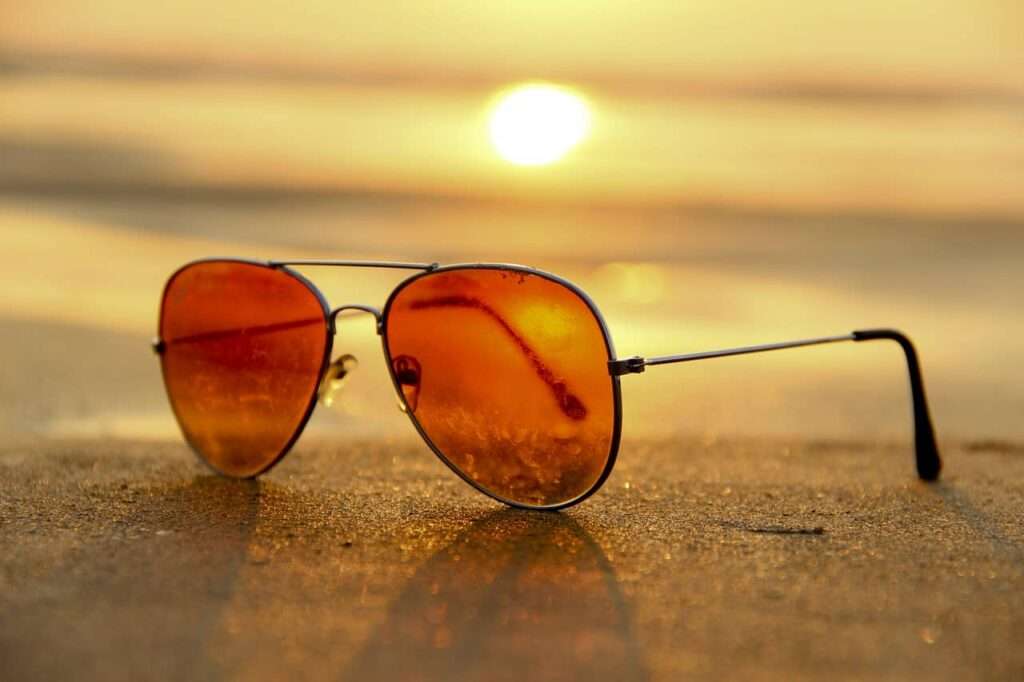
The necessity for wearing sunglasses to protect eyes from light and sunshine has been well established by ”the sunglass manufacturers” which is quite ill-founded and not true. The manufacturers say that if you don’t wear them every time your eyes come in contact with strong light, you are in danger of eye damage. This has become another multi-million dollar business. So, what is the truth?
The fact that people who spend most of their lives in strong sunlight without sunglasses and still have good eye sights is completely ignored.
Sunlight: Under natural conditions, sunlight is not an enemy of the eyes. On the contrary, it is an essential element of for healthy, strong eyes. When eyes are deprived of sunlight for long periods of time, they become weak and oversensitive to light.
It is a well-established fact that persons deprived of light for extended periods of time lose their eyesight. An example of this is the medieval slave miners who were totally deprived of sunlight for years and years and eventually lost the power of sight.
Sunglasses, instead of decreasing the sensitivity of our eyes to strong light, actually perform the opposite function. If you have ever observed people who habitually wear sunglasses, you will notice that their eyes become less able to withstand bright light. They become increasingly dependent upon sun-glasses.
Nature has designed our bodies so that muscles not in use will atrophy. Muscles that are constantly used will become stronger.
The mechanism of the eye which controls dilation and contraction of the pupils is an automatic one. Those individuals who have developed a sensitivity to light should practise the following:
TAGS
The necessity for wearing sunglasses to protect eyes from light and sunshine has been well established by ”the sunglass manufacturers” which is quite ill-founded and not true. The manufacturers say that if you don’t wear them every time your eyes come in contact with strong light, you are in danger of eye damage. This has become another multi-million dollar business. So, what is the truth?
The fact that people who spend most of their lives in strong sunlight without sunglasses and still have good eye sights is completely ignored.
Sunlight: Under natural conditions, sunlight is not an enemy of the eyes. On the contrary, it is an essential element of for healthy, strong eyes. When eyes are deprived of sunlight for long periods of time, they become weak and oversensitive to light.
It is a well-established fact that persons deprived of light for extended periods of time lose their eyesight. An example of this is the medieval slave miners who were totally deprived of sunlight for years and years and eventually lost the power of sight.
Sunglasses, instead of decreasing the sensitivity of our eyes to strong light, actually perform the opposite function. If you have ever observed people who habitually wear sunglasses, you will notice that their eyes become less able to withstand bright light. They become increasingly dependent upon sun-glasses.
Nature has designed our bodies so that muscles not in use will atrophy. Muscles that are constantly used will become stronger.
The mechanism of the eye which controls dilation and contraction of the pupils is an automatic one. Those individuals who have developed a sensitivity to light should practise the following:
TAGS
Added to cart
Check out our shop to see what's available
Loading coupons...